Greensboro hides its elevation changes in plain sight. Drive from Sunset Hills down toward Lindley Park after a summer storm and you will see water racing the curb, picking up mulch and pine straw as it goes. Walk a backyard in Starmount Forest and your ankles tell you the story of a slope the builder tamed just enough to set the house. The Piedmont is not the mountains, and not the coast either. It is a quilt of red clay, patchy topsoil, and soft, rolling contours that look gentle until they send rainwater straight toward a crawl space. This is where thoughtful landscaping earns its keep, especially when you need outdoor steps and slope solutions that look good and work under Greensboro weather.
I have spent enough Saturdays knee‑deep in clay to know that most “problem slopes” aren’t problems until someone adds a patio, a fence, or a downspout that interrupts the path water wanted to take. The good news: with the right steps, risers, and grades, you can guide both feet and water to their best routes. The better news: the materials that suit our region are beautiful in their own right, and when installed well, they age with a kind of honest character that factory pavers sometimes miss.
The lay of the land: Greensboro’s soils, rain, and roots
Greensboro sits on the Piedmont plateau, which means a base of dense, fine‑textured clay that compacts easily and drains slowly. Clay shrinks when it dries and swells when saturated, so it moves more than loam or sandy soils. That movement shows up as hairline cracks in mortared joints and sunken pavers if the base is not prepared with expansion in mind.
Rain patterns matter. We average roughly 43 to 47 inches of annual rainfall, but the meaningful detail is the storm profile. Afternoon downpours that dump an inch in an hour test every joint, drain, and mulch bed. If you’ve ever watched a slope shed all its bark mulch by the time the clouds clear, you learned the same lesson the hard way: water wants a path, and if you don’t offer one, it will make one.
Tree roots complicate things in the best possible way. Greensboro neighborhoods tend to have mature oaks, sweetgums, and maples. Roots lift odd stones in an old stair run, push on retaining walls, and drink enough moisture to dry surrounding soil faster in summer. They also anchor slopes and keep erosion at bay. Designing steps and slope solutions here means working with roots, not against them.
Where steps belong, and how they shape the yard
It is tempting to run steps straight down a slope because it looks direct and efficient. That instinct ignores how people walk when they carry groceries, firewood, or a toddler. We favor broad landings and gentle transitions, especially when the grade changes more than 30 inches. In Greensboro backyards, where many slopes fall around 3 to 5 feet from patio to fence line, an elegant stair run usually breaks into two flights with a landing in between. That landing doubles as a place to set a planter or a bench, turning utility into a feature.
Here’s a trick I learned on a College Hill project with a narrow side yard. We rotated the stair run 30 degrees off the house, then curved the treads to follow the fence line. That small shift created a wider sense of space, slowed the descent, and gave us a pocket for a rain garden at the landing. The homeowners gained safe access and a patch of black‑eyed Susans that now sways with every summer storm.
Choosing materials that suit the Piedmont and your style
There is no single “best” material for outdoor steps. The best choice fits four conditions at once: the soil underneath, the percentage of water the slope catches, the shade pattern, and your maintenance appetite.
Natural stone feels at home in Greensboro. Granitic fieldstone, Tennessee flagstone, and Pennsylvania bluestone all age gracefully and offer traction when wet. For mortared stone steps built on concrete footings, plan for expansion. Control joints every 6 to 8 feet help, and a gravel base under the footing relieves some heaving. Dry‑laid stone steps on compacted crusher run can move slightly with seasonal changes without cracking, but they require careful base work to avoid settling.
Cast concrete holds up to heavy traffic and modern design schemes. Poured monolithic treads look crisp and clean, especially when paired with steel or cedar railings. The downside is temperature expansion and hairline cracking if the base or joints are skimped. A fiber‑reinforced mix and proper joint spacing minimize that risk.
Modular concrete pavers or block systems make sense for terraces and consistent stair dimensions. Manufacturers provide blocks with built‑in riser faces and caps, which helps with speed and uniformity. They are forgiving to install and easier to adjust if a root pushes. The look is more uniform, which some love and others find too tidy.
Timber steps have their place, especially on woodland edges. Ground‑contact‑rated, pressure‑treated timbers or black locust hold up better than untreated lumber. Expect a lifespan of 10 to 20 years depending on exposure. Wood warms up a shady slope visually, but in deep shade it grows algae faster and needs occasional scrubbing.
If you want low maintenance and high traction, a hybrid approach works well: stone treads with gravel or decomposed granite landings. The stone handles the footfall, while the gravel absorbs splash and lets water percolate instead of running.
Getting the math right: rise, run, and the Greensboro footstep
You will hear a dozen rules of thumb for stairs. The one I trust most for outdoor use is based on stride length. For a comfortable exterior stair, twice the rise plus the run should equal about 24 to 25 inches. In practice, that means a 5.5 to 6.5 inch rise paired with an 11 to 13 inch tread. Outdoor treads benefit from a little extra depth, especially where folks might stop mid‑stair to look around or shift what they are carrying.
Consistency is non‑negotiable. One riser that is an inch taller than the rest becomes a trip hazard. On a College Road job, the homeowners had built a DIY stone step set with risers varying from 4 to 8 inches. Nobody fell, but everyone stumbled. We reset the entire run to a uniform 6.25 inch rise with 12 inch treads, and the stumbles stopped. If your slope is irregular, cut that irregularity into your landings or turn platforms, not into the riser heights.
Pitch treads forward slightly, about 1 to 2 percent, to shed water. A perfectly level tread invites puddles, which invite slime. Edge the tread nosing with a texture or slight overhang for grip. For stone, a thermal or bush‑hammered finish holds better than a polished face, which is a nightmare in the rain.
The hidden hero: drainage that spares your steps
Steps fail in Greensboro less because of foot traffic and more because of water that arrives from uphill. If you do nothing else, make a plan for what happens during a one‑inch rain in one hour. Watch your yard once during a heavy storm and you will see the channels plain as day.
Surface water needs a route. Swales, which are shallow, grassy best landscaping in greensboro nc depressions, are often enough to carry water around rather than over a stair run. A swale only 6 to 8 inches deep, shaped with a broad bottom and a gentle slope, can move a surprising volume without looking like a ditch. Lining the swale with a strip of river rock where it crosses under a downspout extension adds capacity and texture.
Subsurface water needs relief. French drains work when installed correctly, not half‑heartedly. That means a trench below the frost line is not required here, but depth should be at least 12 to 18 inches, with a perforated pipe set on compacted gravel, wrapped in fabric to keep fine clay from clogging, and pitched at 1 percent to a daylight outlet or basin. Tie in stair landings with drain grates if you expect water to pool at those pauses.
Downspouts are often the uninvited guests. If one drops water at the head of a stair, extend it downslope and beyond the lowest tread, or better yet, link it to a rain garden or cistern. I watched a lovely bluestone stair get slimy every July because a single copper downspout elbow spilled onto the upper landing. A 20‑foot extension and a hidden pop‑up emitter cured the problem, and the homeowners kept their copper.
Terracing a slope without turning it into a fortress
Retaining walls scare people because they sound like a big, expensive move. In reality, a series of low walls, each under two feet, often stabilizes a slope better than one tall wall, and they give you planting pockets that soften the hardscape. Many Greensboro yards benefit from three terraces: upper, mid, and lower, with steps threaded through like a path. This layout slows water, shortens each run of grade, and creates garden rooms.
For walls, I prefer dry‑stacked stone or modular block for anything under three feet because they flex with seasonal soil movement. Mortared walls look sharp but crack if the base shifts. If you need more than three feet of retained height, it is time to talk about geogrid reinforcement and proper footing dimensions. At that point, a landscape contractor or engineer helps you avoid a wall that bulges two summers later.
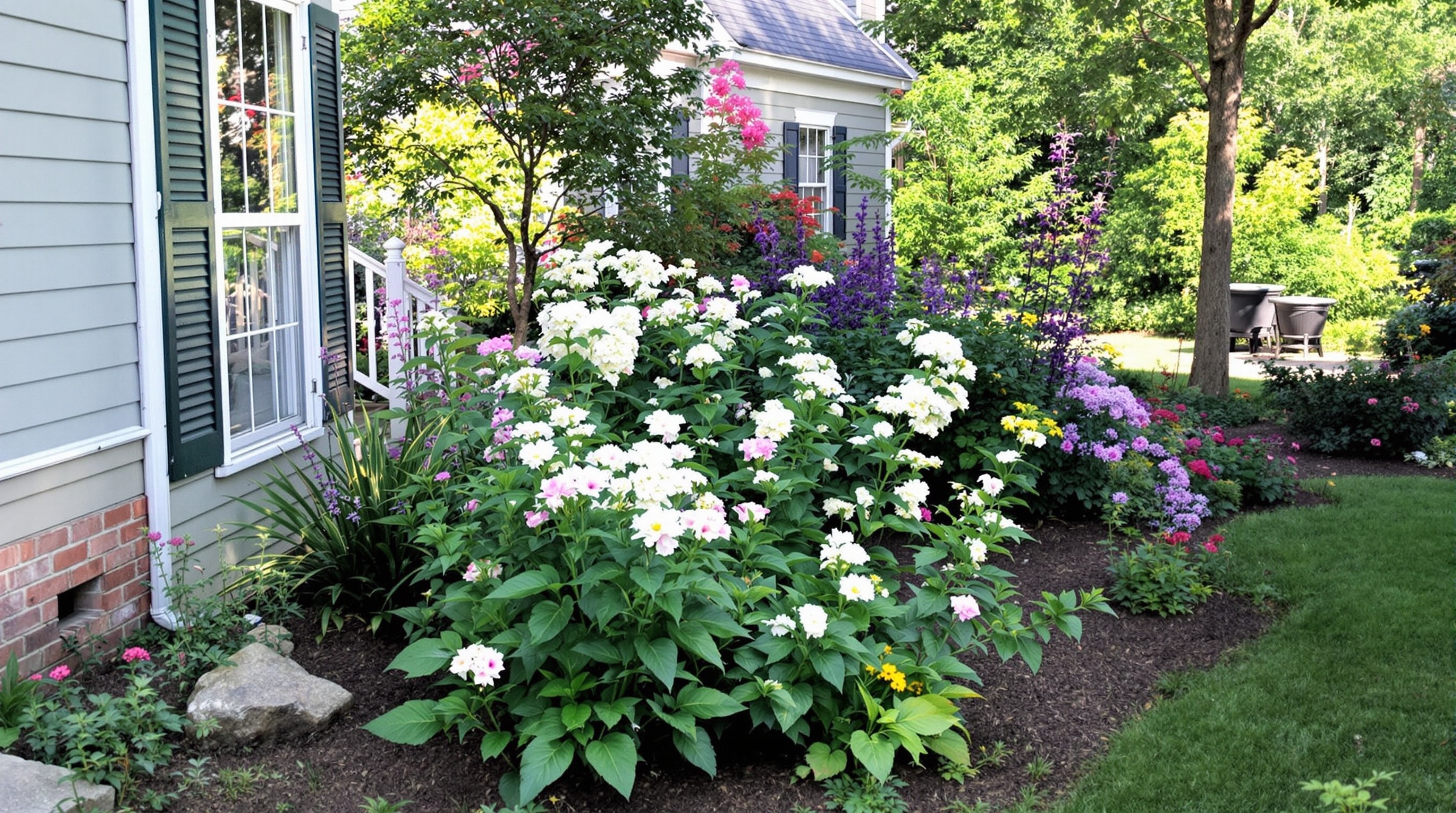
Tie the terraces together with plantings that do work. In Greensboro, native switchgrass, little bluestem, and black‑eyed Susan hold banks and feed the pollinators. Creeping phlox, catmint, and ajuga flow over wall edges and soften stone. For shade, Christmas fern and hellebores settle in and don’t fuss. Roots matter more than flowers on a slope. A deep, fibrous root system stitches soil together in storms.
Safety details that blend in
Good stairs disappear into your sense of place when they are safe. Lighting, handholds, and edges do the heavy lifting without shouting for attention.
Low‑voltage LED step lights under tread nosings or in risers turn a hazard into a welcome. Greensboro’s long evenings make ambient light valuable in spring and fall. Aim for warm color temperatures, 2700 to 3000K, so the stone reads naturally. Keep fixtures accessible; bulbs last years now, but wiring still needs service sometimes.
Handrails often get skipped in residential landscapes because they look “too commercial.” The trick is to integrate the rail with the composition. In a Farm Lake backyard with a cedar fence, we laminated cedar rails with a simple steel bracket, stained to match, and set posts in stone cheek walls. The rail felt like part of the garden rather than a code requirement. If your risers number more than three or four, consider a rail. People carry things, and wet mornings happen.
Edges matter. A contrasting tread face or a slight shadow line under the nosing helps your eye find the step. On concrete or pavers, a darker or lighter soldier course at the nosing both strengthens the edge and cues the foot. On stone, a hand‑chiseled arris provides texture.
Working with shade, roots, and the long term
Shaded slopes hold moisture longer, and algae will find your steps. Material choice shifts in shade. Thermal‑finished bluestone grips better than honed, and rough‑cut fieldstone steps stay safer in winter. Wood grows slick faster, so plan on seasonal cleaning. A bucket of water with a splash of oxygenated bleach and a stiff brush clears algae without nuking the plants below.
Roots will knock if you build too close or cut aggressively. Oak and maple roots near the surface are structural for the tree. Severing a few fine roots is one thing; cutting a 3‑inch root on the uphill side risks windthrow in a summer storm. Where steps press near a trunk, we’ll often arc the run to give a root flare room. It looks intentional because it is. Where a root crosses the intended path, bridge it with a shallow foundation or surface step rather than carving it out.
Maintenance is not an admission of failure; it is the rhythm of a living landscape. Expect to reset a dry‑laid stone tread or two after a few seasons, especially if heavy foot traffic favors one side of a step. Expect to add gravel to landings every couple of years if you choose a permeable path. Plan to prune back groundcovers that soften edges so they don’t obscure the tread. A half‑hour a month keeps steps safe and handsome.
The cost conversation and where to invest
Numbers vary with access, material selection, and surprises under the soil, but rough ranges help set expectations in Greensboro:
- Dry‑laid natural stone steps on compacted base: typically 250 to 450 dollars per linear tread, assuming standard 4 to 6 foot widths, more if we crane in monolithic slabs. Mortared stone steps with concrete foundation: 350 to 650 dollars per tread plus footing costs, depending on stone and detail. Paver or modular block steps: 200 to 400 dollars per tread, efficient for consistent runs. Timber steps: 150 to 300 dollars per tread, economical with a shorter lifespan. Low retaining walls under three feet: 35 to 65 dollars per face square foot for dry‑stack or block, more for mortared stone.
Invest in the base, drainage, and lighting before you splurge on the rare stone. A well‑built base means even a modest material performs. Good drainage saves you from rework, and lighting extends the use of your garden. If the budget pinches, choose simpler materials now, but pour the footings and run the conduit for future upgrades.
Case notes from Greensboro yards
A Lindley Park bungalow had a backyard that pitched six feet from the back door to the alley. The owners wanted a small patio, a vegetable garden, and safe access to the trash bins. We cut the grade into three terraces with two sets of three stone steps. Each terrace fell about 24 inches, which kept walls under two feet. A swale ran behind the upper patio and delivered roof runoff to a rain garden planted with iris and Joe Pye weed. In a storm, the swale carried the load without a rush over the steps, and in summer, the kids leap from landing to landing as if it were built for play, which it was.
In New Irving Park, a formal front walk needed a reset. The original brick treads had settled unevenly over thirty years. We lifted the brick, rebuilt the base with compacted crusher run to eight inches, and added a perforated drain along the uphill edge with two cleanouts disguised as boxwood clumps. The risers returned to a uniform 6 inches with 12.5 inch treads. We swapped three top‑landing brick courses for a single bluestone slab to highlight the threshold. Now the walk reads as intentional, and the homeowners no longer warn guests to watch their step.
On a Lake Jeanette property with a long, shady slope to the dock, timber steps had rotted where they met the damp soil. Rather than replace in kind, we split the run into stone switchbacks with compacted granite fines as the tread surface. At each turn, we set a bench cut from a fallen oak on the property. LED path lights hung low from steel stakes, no glare. The new route takes ten seconds longer to descend, which is the point. Nobody rushes to the dock anymore, and no one slips.
When to call a pro, and what to ask
DIY has its place. If you are resetting three stone treads at a garden gate, a weekend and a tamp will do. If you are carving a new run across a slope that carries your whole roof’s drainage, hire help. The best landscaping in Greensboro NC respects both the look and the physics of the site. When you talk to a contractor, ask them to walk the yard with you during or right after a rain. Ask how they plan to move water. Ask what base depth they use under steps, what compaction standard they hit, and what fabric, if any, they include under gravel in clay soils. Good answers sound like specifics, not slogans.
Reputable landscaping greensboro teams will volunteer maintenance expectations. They will tell you that a french drain needs a cleanout, that a swale needs to stay free of leaves, and that a wood rail should be sealed every couple of years. If someone promises a “no maintenance” slope solution, smile and keep looking. The landscape is alive. The right goal is low maintenance that suits your life.
Plant companions that make stairs feel at home
Hard edges need soft flanks. On sunny south‑facing slopes, I lean on juniper ‘Grey Owl’ to anchor corners, then sprinkle in salvia, coneflower, and sedum for color that tolerates heat and reflects burning afternoon light. On eastern exposures with morning sun and afternoon shade, oakleaf hydrangea and itea give you structure and fragrance. For deep shade, layers of hosta, fern, and autumn fern hold moisture and give textural contrast to stone.
Keep planting pockets shallow near treads, so roots do not lift edges. Use mulch sparingly near the stair path and switch to gravel strips where runoff would carry bark away. In fall, blow leaves off treads before they mat and make the steps slick. At the foot of a stair, consider a gravel or river rock splash zone, then resume mulch farther out. That small band keeps the stair edges clean after storms.
Five questions to clarify before you start
- What is the steepest part of the slope, and where does stormwater currently go during a heavy rain? How often and in what ways will people use these steps, and what will they carry? Which materials fit the house style and your maintenance habits, not just your first impression? Where will lighting and handholds integrate cleanly so they feel natural rather than tacked on? If a large root or utility line shows up during excavation, what is the plan B that protects both the project and the site?
A Greensboro approach to durability and grace
Landscaping in Greensboro NC is a conversation with water, clay, and time. Outdoor steps and slope solutions succeed when they are honest about those partners. That honesty shows up in extra inches of compacted base, in a swale that looks like a gentle meadow fold, in a landing that invites a pause, and in a rail your hand reaches for without thinking. It shows up in how the garden works during the worst afternoon storm in August as much as how it photographs in May.
If you are weighing options and collecting bids, favor teams that talk about grades and drains before they talk about stone color. The best landscaping in Greensboro NC starts with function, then layers in beauty. When the storm clouds open and your steps stay grippy, your landings stay dry, and your garden holds its soil, you will feel the difference each time you cross the yard.