Greensboro is a city that likes to surprise you. One minute you’re under a maple canopy on a quiet College Hill street, the next you’re stepping into a backyard with a stone terrace that feels carved from a Blue Ridge hillside. The best landscaping in Greensboro NC doesn’t just make things pretty. It invites you out of the kitchen at sunset. It cools a harsh southern exposure, takes the bite out of red clay slopes, and soaks rain before it puddles. Done well, a yard here becomes a small adventure of its own.
Over the last fifteen years working on landscapes across Guilford County, I’ve learned that before and after isn’t a single moment. It’s a series of decisions and small experiments, stitched together with a feel for the Piedmont climate. A teardown lawn near Lake Jeanette becomes a pollinator corridor. A cramped Fisher Park side yard turns into a slender courtyard with an herb wall and string lights. The photos are satisfying, sure, but the real measure is how a space behaves through seasons, storms, and the August heat we all pretend we don’t mind.
The Greensboro canvas: red clay, sudden rain, long summers
If you’ve dug a post hole in Greensboro, you know the clay. It compacts across seasons and repels water after a dry spell, then turns slick as soap when a thunderstorm unloads an inch in fifteen minutes. Traditional East Coast landscaping methods need tweaks here. You learn to amend, build up, and channel.
Soil is the first fork in the road. Most yards I visit test in the acidic range, 5.0 to 5.8 pH, with low organic matter. That combination punishes turf and gulps fertilizer without much effect. Before planting, I budget time for aeration and topdressing, or honestly, for deciding where lawn no longer makes sense. A strategic 6 to 8 inches of raised bed filled with compost-rich soil can turn an underperforming corner into a thriving edible patch. Add a gravel channel and a dry well, and suddenly a muddy side yard is a clean path that doubles as stormwater management.
Weather adds its own rules. You get warm spells in February that wake azaleas early, then a zap of frost around mid March. Summers stretch, so plants that merely tolerate heat in other zones often fry here by late July. The best landscaping in Greensboro NC respects that rhythm. Think plants that can handle heat, shrug off a downpour, and sit patiently through short droughts. When you layer natives and adapted varieties with deep roots, you get structure and durability, not just spring color.
What “before” usually looks like, and why that’s okay
Walk a typical Greensboro property and you’ll see a familiar starting point: a patchy front lawn with two caved-in beds hugging the foundation, a line of hollies planted too close, maybe a crepe myrtle lopped into a lollipop five years back. The backyard slopes away, the fence leans, and the AC unit howls from a corner you can’t ignore.
The temptation is to replace everything at once. I’ve learned to resist. The best results often come from working with what wants to work already. If a volunteer oak has shown up along the back fence, I treat it like a gift. If a swale collects water reliably, I’ll turn it into a rain garden instead of fighting it. Protect what’s promising, remove what’s actively making life harder, then design so the new pieces solve problems the old ones created.
A “before” also contains clues about how the owners live. Is there a grill rusting in the far corner because there’s nowhere near the house to prep? Are the toys clustered on that strip of shade between 3 and 5 pm? Did the dog beat a track along the fence because the gate sticks? Landscaping greensboro succeeds when you map these patterns and design to them, not around them.
Case study: a Lake Daniel bungalow goes from soggy to social
The first time I stepped into this yard, my foot sank an inch into lawn that felt like a wet sponge. The front looked orderly enough, but runoff from the roof and driveway came roaring into the backyard every time it rained. Moss crept through the turf. The owners, a couple who loved to cook outside, had given up entertaining between April and June.
We started by listening to the water. I staked flags after a storm to mark flow lines, then sketched a slight regrade to push sheet flow into a center swale. A 24 foot dry creek bed, lined with river rock, handled peak surges, and a perforated drain under the gravel tied into a dry well about 40 feet from the house. You could feel the yard exhale after the first big rain.
With the hydrology tamed, the after came into focus. We carved a 12 by 16 foot terrace in the high corner, edged it with chunky Pennsylvania fieldstone, and laid tight jointed flagstone underfoot. The grill finally had a proper landing and a short stone counter. A slim privacy hedge of American hornbeam screened the neighboring windows without shutting out light. For planting, we layered inkberry holly, winterberry, little bluestem, coneflower, and a few drift roses for a bit of low drama. The wettest strip became a rain garden with soft rush, blue flag iris, and blazing star.
By fall the couple was hosting friends with a portable fire bowl. The lawn, reduced by about 40 percent, actually looked healthy, and the mosquitoes were less interested now that standing water had a place to go. That’s a before and after that earns its keep.
Slopes, walls, and the Greensboro hillside trick
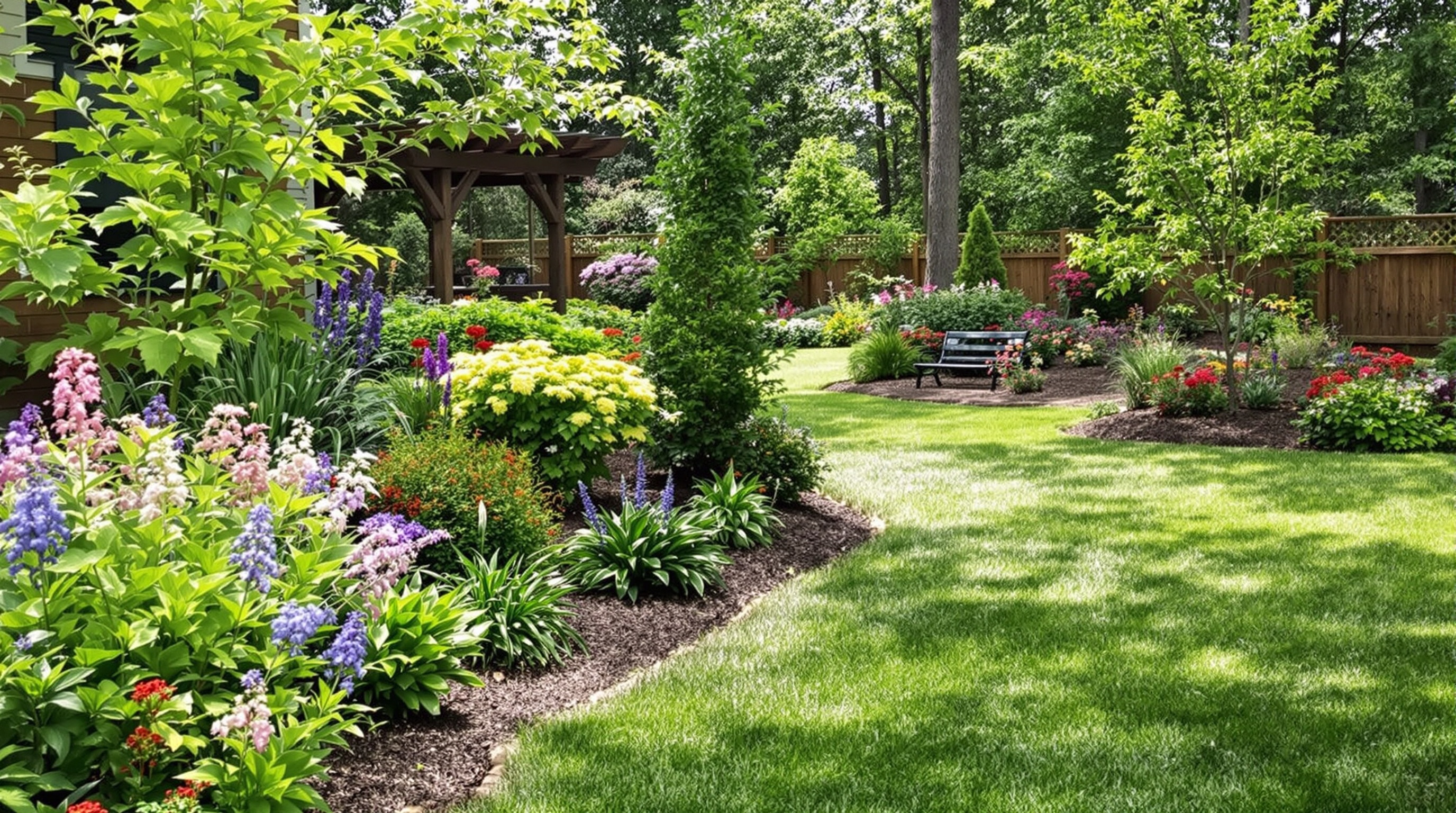
Hillside lawns are a chore. Mowers slip, water races, and soil goes following. But a slope gives you something flat yards can’t: borrowed drama. The trick is to turn that grade into terraces that feel natural, not like fortress architecture. In Sunset Hills we took a 20 percent slope and sliced it into three platforms, each no more than 18 inches of rise between them. That kept walls low enough to avoid permits and engineering, and it made room for different uses.
On the top shelf, we planted a grove of serviceberry underplanted with woodland phlox and Christmas fern. Middle shelf, we built a small seating pocket with a bench tucked into boxwood and fragrant abelia, the kind of spot that makes you take your coffee outside. The bottom shelf, closest to the street, got the most sun. We threw everything pollinators love at it: narrowleaf mountain mint, coreopsis, black-eyed Susan, little bluestem. By the second summer, you could hear that portion of the garden. A hillside that once shed mud onto the sidewalk became a stacked experience, each step down its own room.
If you’re eyeing terracing on your property, remember Greensboro’s soil again. Compaction behind walls is nonnegotiable, and so is drainage. I always spec a perforated pipe with gravel backfill behind any retaining wall taller than 12 inches, even if it seems like overkill. The first heavy storm will explain why.
The shade conundrum: making the most of North Elm’s canopy
Greensboro’s older neighborhoods are rich with mature trees, which means shade. Homeowners often assume shade equals limited choices and, by default, mulch. That’s a lost opportunity. With the right palette, shade gardens here can be more interesting than sun patches.
In a North Elm backyard with a cathedral canopy of oaks and tulip poplars, turf never took. Instead of fighting it, we leaned in. We built up soil with leaf mold and compost to a depth of 4 to 6 inches in sweeping beds that matched how the shadows fell in summer. Planting followed the light gradient: sweetspire and oakleaf hydrangea where dappled sun lingered, then farther in, Christmas fern, autumn fern, hellebores, and liriope for the grind-it-out edges. We dotted in foamflower and woodland phlox for spring, then used Japanese forest grass near the path where a little light slipped through in July.
The before was a dusty, thin lawn. The after felt like a woodland walk with a loop path of pine needles crunching underfoot. A simple boulder with a drilled hole became a low-burble water feature on a recirculating pump. It masked street noise and pulled birds in. Shade stopped being a constraint and started being the theme.
Top Landscaping Company Greensboro NCFront yards with a job to do
The humble Greensboro front yard has to work. It frames a house with different architectural styles, handles stormwater off the roof, manages privacy, and tells the neighborhood who you are, whether you intend it or not. If you want the best landscaping in Greensboro NC to stick the landing, get the fronts right first.
A front lawn can still make sense, especially on a tight urban lot where the expanse helps a bungalow breathe. But I like to pull the lawn back from the sidewalk, create a deep border that soaks water, and add a small tree that relates to the facade height. A multi-stem serviceberry or a small crape myrtle, grown naturally without topping, can tie into a porch line in a way that feels inevitable. Layer in native inkberry and switchgrass for structure, then add perennials that thrive here. When the front garden actively drinks during a storm, you reduce runoff and keep the sidewalk drier, a small courtesy that neighbors appreciate.
Privacy is another front yard job. Instead of a boxy hedge across the property line, I often set a loose screen closer to the house, then let the front edge remain welcoming. A staggered trio of sweetbay magnolias can veil a living room without brooding over the street. Add underplantings and suddenly you have a picture window that frames a living thing instead of a car roof.
Greensboro plant heroes that punch above their label
People ask for plant lists like they’re recipe cards, and while I resist one size fits all, a few species have earned their keep across ZIP codes. These workhorses show up in the best landscaping in Greensboro NC because they deliver three or four wins at once.
- Inkberry holly: The dwarf cultivars like ‘Shamrock’ hold a tidy mass without the bare shins that plague older varieties. Good for foundation lines, rain garden edges, and mixed evergreen structure. Sweetspire: ‘Henry’s Garnet’ tolerates wet feet, perfumes a June evening, then turns red in fall. It’s a stitcher, tying together shade and sun transitions. Switchgrass: ‘Northwind’ stands like a line of soldiers through snow. Loves heat, loves neglect, laughs at short droughts. Mountain mint: The narrowleaf species hums with pollinators. It spreads politely if you give it space. Crush a leaf and tell me it doesn’t make you think of cold water on a hot day. Serviceberry: Multi-season tree, with white spring bloom, edible fruit, clean form, and yellow-orange fall color. Birds will get most of the berries. Let them.
That’s one of our two lists. I’d add one more plant note born of hard seasons: avoid blanket swaths of one cultivar. Greensboro’s microclimates can turn on you. Variation builds resilience. Mix slightly different bloom times and forms so a late frost or a hot week doesn’t flatten an entire bed’s moment.
Hardscape that ages with you, not against you
In this climate, materials matter. I see plenty of poured concrete patios with hairline cracks after two winters and a few drought cycles. You can mitigate with cuts and proper base, but dry-laid stone and quality pavers often age better, especially when you have trees nearby. Roots will move. A flexible system lets you lift and reset.
For a patio in Lindley Park, we chose a composite of Belgard pavers in a tan-gray blend that matched the home’s brick without going beige. We set a border soldier course to keep the field tight, then used polymeric sand to lock joints. The base, a true 6 inches of compacted ABC stone, matters far more than the paver brand. In shaded corners we shifted to gravel that lets moisture breathe away instead of growing a slick film on stone. The fence line got a simple horizontal cedar run, sealed once with an oil finish and then left to silver out. Greensboro sun will do that in a season, and it looks good against green.
Steps deserve special attention, especially with family or guests using them at night. Keep risers consistent and shallow enough for comfort, 5.5 to 6.5 inches, add a landing if you change direction, and light them softly with shielded LEDs. Nothing ruins an evening like a deep shadow on a step edge.
Budget, phasing, and where to spend first
Not every yard needs a top to bottom overhaul. In fact, some of the best transformations in landscaping in Greensboro NC happen over two to three years. Phasing keeps momentum while honoring a budget.
Spend first on drainage and grading. That money doesn’t show off on Instagram, but it underwrites everything else. Next, get your main gathering space right, close to the kitchen door if possible. When you use a space often, you’ll take care of it. Third, tackle screening and privacy where you feel most exposed. You’ll relax faster in the new landscape if you can tuck in. Finally, plant in layers: structure shrubs and trees early, perennials and groundcovers as you can.
Here’s a quick phasing snapshot that’s served my clients well:
- Phase one: Site prep, drainage, grading, garden bed layout, and soil building. Phase two: Primary patio or deck, path to it, and low-voltage lighting runs even if you add fixtures later. Phase three: Evergreen structure and key ornamental trees. Phase four: Perennials, grasses, and seasonal color, plus container accents and a small water feature if desired.
That’s the second and final list. It keeps the rest of this conversation in prose, where nuance lives.
Curb appeal is a byproduct of good systems
A tidy edge and a few strategically placed pots will dress up a yard for a weekend, but long-term curb appeal comes from systems doing their work quietly. When water is managed, plants are matched to light and soil, and circulation is intuitive, your yard looks composed even between maintenance cycles. I call it earned neatness. You’ll notice it when a week of rain passes and the mulch hasn’t migrated to the sidewalk, or when a dry spell hits and your switchgrass still stands tall while the neighbor’s lawn browns.
Mulch plays a role, but it’s not a fix for poor spacing or thin soil. In Greensboro, I prefer double ground hardwood in spring, then a touch-up in late summer where beds lost coverage to heavy storms. If you’re tempted by dyed mulch, test it in a corner first. On older brick houses, bright black mulch can look harsh in August light. A natural brown leans warm and quietly recedes.
Wildlife, pets, and the human factor
Greensboro’s yards share space with a lively cast: birds moving along the greenway corridors, rabbits that have read your plant list, and deer that occasionally stroll in from a creekside patch. Plan with them in mind. Physical barriers like low, discreet wire cages around fresh hosta can save your sanity the first year. For rabbits, I’ll often ring new coneflowers with mountain mint or catmint, which they tend to ignore, at least long enough for the perennials to toughen up.
Pets need paths and room to sprint, plus surfaces that handle claws. Flagstone joints wider than an inch can catch small paws, so keep joints tight on dog routes. A mulched run along the fence, with stepping stones at gates, contains the muddy track that dogs carve anyway. I’ve yet to meet a retriever who apologizes to a bed of salvia.
Human behavior is the most predictable of all. People will cut the corner from driveway to porch. Give them a stepping stone or shift a bed edge to meet the desire line. The best landscaping greensboro clients tell me how they move through the yard on weeknights and Sunday mornings. That’s the map you draw from.
Four Greensboro before-and-after snapshots, distilled
The photos will tell their own stories, but here are the parts you won’t see on Instagram that made the transformations stick.
The College Hill courtyard: A narrow side yard with utility clutter became a brick courtyard with a cedar slat screen hiding bins. We tucked a shallow herb trough along the fence, mounted on brackets. It freed up floor space and doubled the yield. Lighting came from one lantern sconce and three low path lights, warm temperature lamps, all on a timer. At dusk, it reads as a room.
The Starmount slope: The owner wanted an edible garden but had only a slant that burned hot all afternoon. We terraced with 8 inch timber beds pinned with rebar, built on contour, and ran drip irrigation from a spigot timer. Blueberries and figs got the top shelf, tomatoes and peppers the middle, and sweet potatoes and rosemary the bottom where heat reflects off the driveway. The first summer, the drip system saved three watering cans a day.
The Irving Park screen: A pool install left the yard feeling exposed to a street bend. Tall privacy fences were out of the question. We staggered two rows of ‘Green Giant’ arborvitae, but broke the run with three sweetbay magnolias and a serviceberry to avoid the “hedge wall” look. It softened the pool corner, added motion with leaves, and gave spring blooms. The mix also reduced disease risk that can come from monoculture screens.
The Glenwood rental: Curb appeal needed to deliver for tenants. We removed a failing strip of turf and replaced it with a gravel ribbon path and low water plantings: rosemary, lavender, ‘Walker’s Low’ catmint, and purple coneflower. We added a simple cedar box with house numbers and a solar light. Maintenance became a twice a year trim, and the house photographed beautifully, which matters in a rental market.
Lighting: the difference between a yard and a destination
Greensboro evenings in late spring border on perfect. Lighting makes the yard lingerable. Resist the urge to stick bright spots everywhere. Aim for layers: a few uplights on key trunks, soft path lights where feet go, and a gentle wash on a wall or fence behind a seating area. I keep color temperature warm, 2700K, and shields tight. Your eye should find the glow, not the bulb.
One small trick on older homes: graze the brick with a low wattage light 18 inches off the ground. It reveals texture and makes a simple corner feel intentional. In summer, the light bounces off leaves in motion, which reads cooler than the thermometer says.
Water, not just as a problem to solve
Rain gardens are one answer, but water can be a companion too. On a Bradford street project, we set a basalt column near the patio, drilled for a recirculating bubbler. It pulls in birds and quiets highway hush on windy days. The maintenance is light, a pump cleanout once a season and a top-off during dry spells. On a budget, a stock tank with a solar bubbler does the trick, tucked into grasses. Pair water with stone and a sitting spot, and the yard becomes a place you go, not just look at.
The local touch: why Greensboro choices matter
You could copy a Charleston courtyard or a Denver xeriscape and get something pretty. But the best landscaping in Greensboro NC nods to our place. That means honoring the Greensboro Science Center’s pollinator efforts by planting for bees and butterflies. It means choosing materials that cool off underfoot for bare feet in July. It means working with our red clay rather than pretending it’s loam.
It also means knowing the city rules. If you’re near a stream buffer, you’ll need to respect setbacks and plant accordingly. If your retaining wall creeps over 4 feet, you’re in permit territory and possibly engineering. Some neighborhoods prefer lower fences, some embrace taller screens. A good plan weaves these realities into the design from the start, not as an afterthought.
Maintenance that doesn’t own you
Every after needs a maintenance plan that fits your life. I like to write them like recipes, tailored to the yard. Here’s the gist that suits most Greensboro properties:
Spring: Cut grasses in late February, refresh mulch, edge beds, feed shrubs lightly if soil tests call for it. Check irrigation and lighting. Early weeding makes summer easier.
Summer: Deep water new plantings, then back off. Trim lightly after first flush blooms to reset perennials. Watch for lace bugs on azaleas; a hard spray of water often gets you most of the way there.
Fall: Plant trees and shrubs when soil is still warm. Overseed any lawn you’re keeping. Enjoy the best working weather of the year.
Winter: Prune structure lightly on trees and shrubs when you can see the bones. Don’t hack crape myrtles. Let seed heads stand for birds and interest unless safety calls for clearing.
With that rhythm, you avoid the feast or famine approach that tires people out. A yard that gets an hour a week of thoughtful care will beat one that gets a frantic weekend twice a year.
Why before and after is really about during
Those glossy reveal photos matter less than how you feel walking outside on a Wednesday evening. A good landscape makes you linger on the steps, notice light on leaves at 6 pm, snip herbs without thinking, and wave to neighbors over a border that welcomes them while giving you a little privacy. It also shrugs when a thunderstorm dumps 2 inches in an hour, then resets without fuss.
Greensboro rewards that kind of design. Our climate is generous if you match it. Our neighborhoods hold stories in brick and oak and creeks that wander between backyards. When you approach landscaping greensboro as a conversation with that place, the after takes care of itself.
If you’re standing in a patchy backyard right now, looking at clay and a leaning fence, don’t be discouraged. Start with water and soil, shape a place to sit that you’ll actually use, plant what will thrive here, and build a few moments that catch the light just right. The best landscaping in Greensboro NC isn’t a style so much as a way of living with this city. The transformation happens in phases, sometimes quietly, then suddenly all at once when you realize you’re outside more nights than not.
That’s the after worth chasing.